On this page, I'll write about things that make me think plants are amazing.
I find plants truly amazing.
Do you ever feel that way about plants, dear reader?
Of course, not just plants—all kinds of living things, and even non-living things, are incredibly amazing, so it's endless…
This time, while our Earth is full of such amazing things,
it relates to plants, which I frequently find truly amazing.
What's so great about plants?
“Why do I find myself so often amazed by plants?” When I think about it, I believe one reason is that I simply encounter them far more often.
As the author, I do not live in an extreme urban environment (what is commonly referred to as a concrete jungle).
Therefore, when I look around, I inevitably notice various plants and some form of plant community they create.
・Weeds growing by the roadside
・Fields and gardens planted with vegetables, flowers, and ornamental plants
・Mountains visible in the distance
・Bamboo groves encroaching from neighboring land
Plants are everywhere, displaying a variety of hues centered around green and beige.
When you encounter the ‘amazing’ in plants
Among the many opportunities to see them, the times I find plants truly amazing are...
(1) When focusing on a single plant and observing it
(2) When observing or contemplating the relationship between one and two
(3) When learning about the environment or conditions of combinations beyond that
(4) When encountering the points of contact between them and other living beings, including humans, and the circumstances or outcomes leading to a certain point
(1) When focusing on a single plant and observing it
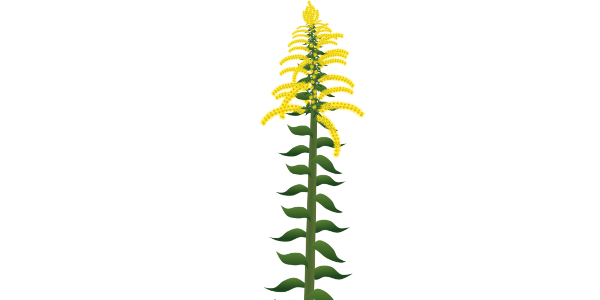
Here, I will talk using 'goldenrod' as an example.Are you familiar with goldenrod?
Have you heard of goldenrod?
What is goldenrod?
This plant is commonly seen in untouched areas like abandoned farmland, wasteland, or embankments—places that make you think, “Wow, the weeds are really thick here.”
True to its name, it grows tall, reaching heights of about 1 to 2 meters from summer to autumn.
From autumn to just before winter, it's that plant you see from afar, blooming yellow flowers in a cone-shaped cluster.
It's not ragweed. It's goldenrod.
Goldenrod was once thought to cause bronchial asthma and hay fever.
In reality, this plant produces relatively little pollen,
and it is not wind-pollinated (where pollen is dispersed by wind for fertilization) but insect-pollinated (where insects like bees facilitate fertilization by moving between plants).
Therefore, it is unrelated to those conditions and the belief is considered a misconception.
It was probably mistaken for ragweed.
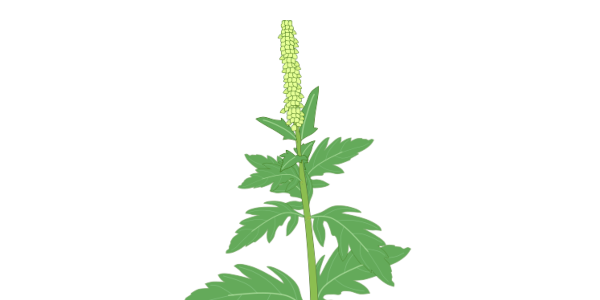
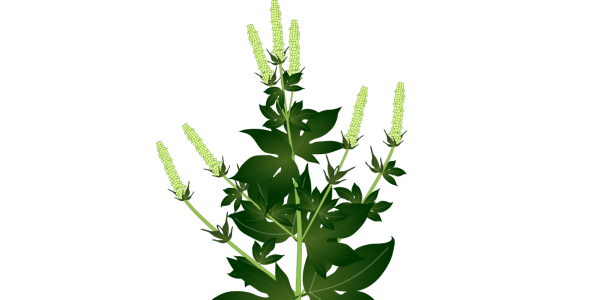
Ragweed is known to cause hay fever, and it's true that goldenrod bears a certain resemblance to it.
In fact, searching for images of ragweed often brings up many pictures of goldenrod flowers. (Searching for “giant ragweed” yields more accurate plant images.)
The often misunderstood goldenrod is a tough plant.
The goldenrod that had been misunderstood like that.
I won't say it's pitiful to be misunderstood.
They aren't weak enough to be pitied for being called that.
Because there was a reason they stood out enough to be misunderstood.
That reason is:
They are too strong.
They are simply too strong.
The goldenrod that came from North America proved far too powerful for the land of Japan.
Was it their excessive reproductive capacity?
Of course it was.
But more than that, their invasive power is formidable.
This is what makes them so formidable.
Plants with strong reproductive capacity might be a familiar concept to anyone who has ever weeded a field or garden.
Fundamentally, plants commonly called weeds are highly reproductive.
In fact, it's precisely because they reproduce so readily that we see them so often.
And it's precisely because they reproduce so readily that they're considered nuisances and despised in human activities...
Goldenrod is certainly one such plant.
But what kind of power is this invasiveness that I find even more astonishing?
Tall Goldenrod and Allelopathy
Plants exhibit a phenomenon called allelopathy.
Allelopathy is translated into Japanese as “heikan-sō” (他感作用).
What exactly is this?
Broadly speaking, it refers to the effect where substances contained within plants dissolve in water or are released, thereby exerting some influence on other plants, microorganisms, or animals.
Ragweed is a plant with particularly strong allelopathic effects.
Perhaps because its allelopathy was so intense and conspicuous,
it was even used in Japan's first allelopathy experiment.
So, what exactly is this allelopathy of goldenrod?
This is precisely why they possess such strong invasive power.
Their allelopathy and invasive power.
They release chemicals from their roots,
and these chemicals have the effect of suppressing the growth of other plants.
In other words, they possess the power to prevent other plants from growing.
Furthermore, they not only promote their own proliferation through seeds,
but also expand their territory and reproduce via rhizomes—stems that grow underground.
Using these abilities, they suppress areas occupied by other plants
and establish their own territory to spread.
Because of this invasive power,
it has been listed in Japan's Invasive Alien Species List for preventing ecological damage
and has even been selected as one of the Worst 100 Invasive Alien Species.
The Survival Struggle and Remarkable Resilience Seen in Goldenrod
Plants are living beings too.
The fundamental nature of life is to multiply and persist.
Animals, including humans, compete.
Because they move, their competition is visible and easily understood.
They pass on their genes and ensure their continuation.
Though their movements may be less obvious, we realize plants do the same thing.
Because of this survival strategy,
when I saw that goldenrod not only multiplies itself,
but also possesses a mechanism for subduing others, for invasion,
I felt this plant was amazing.
Asteraceae, isn't it amazing?
Plants, aren't they amazing?
I find Asteraceae truly remarkable.
Incidentally,
Asteraceae,
perhaps because the effects of the chemicals it releases are too potent,
actually suppresses and inhibits its own growth as the concentration increases...
After about 3-4 years of thriving as an invasive species,
it ends up retreating its territory to plants like pampas grass over the next 3 years or so...
It's just too powerful, I guess...
Wow, goldenrod...
Wow, plants...