What's going on with plants?
Step outside, and you'll see all kinds of wildflowers and street trees lining the roads. When you go shopping, you'll encounter vegetables, fruits, flowers, houseplants, and many other plants. At a glance, grass might just look like grass, flowers like flowers, and trees like trees. Of course, within the classification and grouping of plants, they are the same, so broadly speaking, they might appear similar. Yet, if you direct your interest just a little, you might find surprising differences, or conversely, find no differences at all, and perhaps get hooked on the subtle depths of plants.
Such depth—questions like “What makes them different?” “What do they share?” “What makes them unique?”—were studied and later classified by people like Sweden's Linnaeus based on these observations. Thanks to such achievements, in today's information society, we can look up things like “What's the status of that plant?” or “What exactly is this plant?”
Thanks to the organization provided by “classification,” we can now glimpse a corner of the vast plant kingdom. This allows us to determine that this plant and that plant are actually very closely related, like discovering, “They're actually relatives!” However, humans are interesting creatures; we tend to give plants names based on first impressions or initial appearances. As these names persist over time, the classification system sometimes reveals, “Actually, they're complete strangers.”
Let's delve a little deeper into this classification.
Plants Among Living Things: Diving into Biological Classification
Humans... are living things. Dogs, cats, and other animals... are living things.
Plants... are of course living things. They are the same kind of living things. Within this realm of living things, where are they classified and separated into distinct categories?
Living things, meaning the infinitely vast collective known as ‘biological organisms,’ are divided into three classification domains called ‘domains’:
Archaea... Also called archaebacteria, they are found in extreme environments where life seems impossible. (Extreme environments include places like lakes with incredibly high salt concentrations or hot springs with extreme temperatures.)
Bacteria... Commonly known as bacteria. This includes pathogens like tuberculosis bacteria and cholera bacteria, as well as those often mentioned in health contexts like natto bacteria and lactic acid bacteria.
Eukaryotes: Organisms with DNA enclosed within a nucleus, composed of complex eukaryotic cells compared to the cells of archaea and bacteria (prokaryotes).
For now, leaving aside the finer details, plants are classified within this third category, the eukaryotes. Alongside animals like dogs and cats, we humans are also classified as eukaryotes.
Now, humans and plants, along with cats and dogs, are still within the same classification. Despite being organisms with such different appearances, where do they diverge? That said, they separate at the next hierarchical level below ‘Domain’: the ‘Kingdom’. Within the ‘Eukaryota Domain’, plants finally gain independence as the ‘Plantae Kingdom’. This eukaryotic domain branches into the following Kingdoms:
Animalia
Plantae
Fungi
Kingdom Protista
Kingdom Archaea and Kingdom Bacteria (collectively the “Monera Kingdom” or Kingdom Prokaryota)
At last, we enter the plant ‘kingdom’—the world of plants.
Now, into the Plant World ~The Plant Kingdom~
Well, we've finally entered the world of plants, the plant kingdom. From here on, we'll begin exploring the realm where plants are classified based on their commonalities and differences—trees with trees, flowers with flowers, grasses with grasses, and so on.
The Realm Beyond the World ~The Gate~
分類においてIn classification, the ‘Kingdom’ category is followed by the ‘Phylum’ category. However, the definition of plants—that is, “What is a plant?” and “What is classified within the plant kingdom?”—includes organisms beyond the scope of what we commonly see, such as those invisible to the naked eye. While aquariums and the growing interest in aquatic plants may make this somewhat easier to visualize, it's important to understand that the ‘plant kingdom’ is not limited to terrestrial plants—that is, plants growing on land or soil. It also includes seaweed and even more microscopic algae.
Phylum Plantae
Subkingdom: Viridiplantae
Subkingdom: Chlorophyta
Phylum Chlorophyta
Subphylum Streptophyta
Phylum Mesostigmophyta
Phylum Chlorocybophyta
Phylum Cribosulmidophyta
Phylum Chlamydophyta
Phylum Charophyta
Phylum Bryophyta
Phylum Hornworts
Phylum Mosses
Phylum Vascular Plants
<Red Plant Subkingdom> [Red Plant Phylum]
Red Plant Phylum
While classified as above, there are some additional subdivisions between the ‘Plant Kingdom’ and each ‘Phylum’ indicated by “<>” and “[]”. However, due to changes in understanding and progress in taxonomy over time, some groupings exist that do not fit neatly into the major hierarchical divisions. Additionally, bryophytes (Moss Phylum, Hornwort Phylum, Lichen Phylum) and the Vascular Phylum are also referred to as “land plants.” These “land plants” are the plants commonly seen in everyday life, what we typically think of as plants. The complexity of the ‘phylum’ level and below is hard to grasp because these organisms are often invisible or difficult to see, making their complexity hard to visualize. However, starting with these ‘land plants,’ which are easier to imagine, the complexity gains a tangible reality and becomes more prominent. Even so, the number of categories has already grown considerably. Recognizing that things will become very complex, we will now focus specifically on the ‘Vascular Plant Division’ within the ‘land plants’ category as we proceed.
Land Plant, This is Plant
Land Plants: The Emergence from Vascular Plants
From here, we proceed into an area where we encounter plants that take on more familiar forms—plants that feel like “true plants.” Beyond each ‘Gate,’ the plant classifications branch out further, as if from extending tendrils. Naturally, this means the number of domains increases exponentially. As mentioned earlier, we begin with the ‘Vascular Plant Division’ within the ‘Land Plants’ range of the plant kingdom, which allows us to approach the more familiar aspects. Since humans, too, are creatures that predominantly live on the ground—that is, on land—this area clearly evokes a sense of encountering closely related plants. In a way, it feels like excellent naming sense, or perhaps the best possible choice. “Land Plants”—a simple, perfectly fitting name. Now, regarding the ‘Vascular Plant Division,’ many people have likely heard the term “vascular tissue.” It's a key word that comes up in plant lessons learned in school.
Vascular bundle
Vascular bundles refer to the collection or grouping of vascular tissues and conducting tissues. The character “維” (i) is said to have been formed from the image of threads gathering to form cloth, carrying meanings like “to hold” or “to connect.” Vascular bundles serve a role similar to human bones or blood vessels, connecting and holding together the leaves, stems, and roots of plants. Thus, these bundles of ‘tubes’ are precisely what we call “vascular bundles.”
sieve tube
The term refers to the tubes that deliver nutrients (sugars) produced by photosynthesis in the leaves to every part of the plant. I wonder why it's called “師” (shi). The kanji ‘師’ seems to mean “one who serves a god,” and from there, it came to be used for people who teach knowledge or skills. Taking that as a starting point for my own imagination, photosynthesis occurs using sunlight as its source. The sun, often revered as a god since ancient times, with the sun god Ra being a prime example. Photosynthesis occurs primarily in leaves. In essence, leaves react to sunlight, produce nutrients, and transmit them throughout the body. Put another way, they receive light—a messenger from the divine sun—and convey the divine will, like a message of nourishment, to the body's parts, its subjects. So, perhaps we could interpret these tubes as “messenger tubes.” I'll jot down these random thoughts as they come to mind.
vessel
Vessels that transport water and nutrients absorbed by the roots throughout the body—simply called “vessels.”
Plants sharing this mechanism and body structure are classified under the ‘Vascular Plant Division’. What are the ‘classes’ within this ‘Vascular Plant Division’?
Subdivision: Tracheobionta
Subdivision: Pteridophyta
Subphylum: Seed Plants
Following the trail of the Phylum Vascular Plants, there are further gates: the three ‘subphyla’ mentioned above. Furthermore, within the ‘Subphylum: Seed Plants’, there are also two ‘subdivisions’ called ‘subphyla’:
Subphylum: Gymnosperms
Subphylum: Angiosperms
This double or triple layering of divisions creates a structure as substantial as the grand entranceways found in northern regions. For those who grow plants, it might be more like tunnels inside a greenhouse. It seems very warm—though that's just my own unnecessary daydreaming. Regarding the ‘subphyla’ within the ‘Subphylum Seed Plants’, we see the difference between ‘gymnosperms’ and ‘angiosperms’. This is the key point: it marks the first branching point of ‘seed plants’. In other words, it's about whether the seed is ‘naked’ or ‘covered’ by something. The commonality is that both possess seeds. From this perspective, the difference between the ‘Hikagenokazura Subphylum’ and ‘Fern Subphylum’ versus the ‘Seed Plant Subphylum’ lies in whether seeds are present or absent. That is, the branching point is that the ‘Hikagenokazura Subphylum’ and ‘Fern Subphylum’ lack seeds and do not reproduce via seeds. Furthermore, regarding the subphyla Rynchophyta and Pteridophyta, very broadly speaking, they diverge based on whether they are composed of small leaves (pinnules) or large leaves (macrophylls).
Departure from the Gate ~ The Hand Reaching Out from the Gate, the Rope ~
Following the reins through the realms of the ‘Gates’, what lies beyond each ‘Subphylum’ and ‘Infraphylum’? Examining this, the ‘Classes’ emerging from each ‘Gate’ are as follows:
[Hygrophyllan Subphylum]Hygrophyllan Class
[Fern Subphylum]Equisetopsida Class
Lycopodiopsida Class
Selaginellopsida Class
Lycopodiopsida Class
[Gymnosperm Subphylum]Cycadopsida Class
Ginkgopsida Class
Pinopsida Class
[Angiosperm Subphylum]Magnoliopsida
As mentioned earlier, the difference between the ‘Hygrophylloideae Subphylum’ and the ‘Pteridophyta Subphylum’ is broadly based on the distinction between ‘small leaves’ and ‘large leaves’. The ‘Class’ traced from the ‘Hygrophylloideae Subphylum’ is the unidirectional ‘Hygrophylloideae Class’. From the ‘Pteridophyta subphylum’, four ‘classes’ can be traced. Essentially, these are all what are commonly called ‘ferns’, representing a broad division of these ‘ferns’ into four groups. Furthermore, the ‘Gymnospermae subphylum’ can trace three ‘classes’. ‘Gymnosperms’, meaning plants with exposed seeds, fall into these three ‘classes’. Surprisingly, perhaps, the ‘Subdivision Angiosperms’—which likely encompasses the most common or familiar plants—gives rise to only one ‘class’. That is the ‘Magnoliopsida’. In the old classification system, the focus was on the number of cotyledons. It was a classification meaning the ‘class’ of plants with two cotyledons, the ‘dicotyledons’. From that subclass, the classes also branched into the ‘class’ of plants with one cotyledon, the ‘monocotyledons’.
cotyledon
The word “seed leaf” is written with the characters for “small leaf.” It refers to the very first leaves that emerge. These seed leaves are originally contained within the seed, and perhaps because of this, some people refer to them as “bean leaves” (mameppa), as if the seed were a bean. Although written as “child leaf,” I think it is truly a baby leaf in the true sense. Common baby leaves, which have already developed true leaves, could actually be called young leaves.
In the latest mainstream classification system, they can be classified as “Angiosperms” = “Magnoliopsida”. This latest classification method focuses on the “Angiosperms subphylum = Magnoliopsida” and was constructed based on evidence from genome analysis. It is called the “APG system” or “APG classification system.” APG stands for Angiosperm Phylogeny Group, which is an organization of botanists who perform classification, but in reality, this classification system does not have a name. This unnamed yet renowned APG system will be adopted in the upcoming “Angiosperms Subphylum = Magnoliopsida” section.
Following this progression through the ‘Class’ level, we arrive at the ‘Order’ level. It's an area that narrows the focus, much like tightening the reins from the hand position, pinpointing the target.
The Realm of Using Your Eyes ~The Premonition of When Differences Become Visible~
Focusing our attention narrows the scope to the ‘eye’ category. Naturally, this is an increasingly detailed realm. Therefore, we must carefully prepare our eyes and narrow our focus. It is precisely an area that demands our attention. Let us examine this ‘eye’ category. First, we list everything outside the ‘Angiosperms Subdivision = Magnoliopsida Class’.
<Subphylum: Tracheobionta>
[Class: Tracheobionta]
Order: Tracheobionta
Order: Hydropsilales
Order: Iwahibales
<Subphylum: Pteridophyta>
[Class: Equisetopsida]
Order: Equisetales
[Class: Lycopodiopsida]
Order: Lycopodiales
Order: Lycopodales
[Class: Selaginellopsida]
Lycopodiopsida
[Pteridophyta Class]
Pteridopsida
Lycopodiopsida
Pteridopsida
Pteridopsida
Pteridopsida
Pteridopsida
<Gymnosperms Subdivision>
[Cycadopsida Class]
Cycadopsida
[Ginkgoopsida Class]
Ginkgoopsida
[Pine Class]
Pine Order
Southern Cypress Order
Hinoki Order
Welwitschia Order
Gnetum Order
Mao Order
As shown above, plant names we might have heard of before appear, alongside others we've never encountered. Still, just as the “Hinoki Order” exists within the “Pine Class,” we gradually begin to see connections like, “Oh, they were part of that group!” Now, I'd like to examine another ‘division’ and ‘class’—the “Angiosperms Subdivision = Magnoliopsida” handled in the previously mentioned APG classification system. However, as I try to focus, the broad, vague divisions seem to stretch higher and wider than I had imagined. Let's take a sideways glance at this vagueness. Moving past such descriptions, this ‘Magnoliopsida’ is classified at a slightly broader level called a ‘superorder’ before reaching the ‘order’ classification stage.
[Angiosperms Subdivision>Magnoliopsida Class]
Amborella Superorder
Nymphaeales Superorder
Austrobaileales Superorder
Magnoliales Superorder
Liliales Superorder
Lycopodiopsida
Buxopsida
Gymnospermae
Ranunculopsida
Dicotyledoneae
Myrtaceae
Rosales
Berberidopsida
Caryophyllales
Santalales
Asterales
Within these ‘superorders’, the Magnoliidae, Liliales, Myrtaceae, Rosales, and Asteridae contain detailed ‘orders’. For the others, the classification seems to be a single, unbroken line from ‘superorder’ to ‘order’—meaning the names are identical, making the ‘superorder’ level feel like a distinction that exists but doesn't. Let's shift our focus to the actual ‘orders’.
[Magnoliopsida]Cinnamomales
Lauraceae
Magnoliidae
Piperales
[Liliopsida]Iridales
Alismatales
Acorales
Dioscoreales
Liliaceae
Tropicariaceae
Sarcopetalales
Arecaceae
Commelinaceae
Poales
Zingiberales
[Mirotamnus Superorder]Gunnerales
[Rosales Superorder]Vitisales
Celastrales
Cucurbitales
Fabales
Fagales
Corymbosiaceae
Oxalidaceae
Rosales
Polygonales
Brassicales
Crocosmyales
Geraniaceae
Fuerteaceae
Malvaceae
Myrtaceae
Picramniaceae
Euphorbiaceae
[Asterid superorder]Cornusales
Ericaceae
Galliaceae
Gentianaceae
Lamiaceae
Solanales
Apiales
Aquifoliaceae
Asteraceae
Brunelliales
Ericaceae
Escaroniaceae
Paraclytiaceae
These are the ‘orders’. As you can see, familiar plant names appear one after another. It might be that the ‘order’ level is where you can enjoy looking at plants with that eye—where they seem similar yet different, different yet similar, and you can just barely tell them apart or not. That probably isn't the case, but looking at plants with that feeling is also enjoyable.
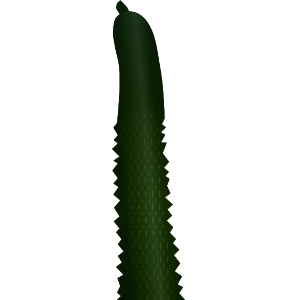
And then, you begin to see plants that are surprisingly closely related. For example, looking at the “Liliopsida superorder,” the “Liliopsida” and “Zingiberales” are in the same domain. The lily, distinguished by its flower, and ginger, distinguished by its aromatic spice, are unexpectedly distant relatives. Looking at the “Rosales superorder,” you find the ‘Cucurbitales’ and “Vitisales.” While cucumbers, familiar to us, are pickled for their green scent, grapes captivate us with their rich aroma, sweetness, and tannins—yet they are distant relatives. It's like discovering, “That famous warrior was my distant ancestor!” or “This great figure is actually my great-grandmother's brother's cousin!”—a distant yet traceable connection through lineage. It's like discovering, “We're actually related!”—that feeling of understanding yet not quite grasping it, or not quite grasping it yet somehow understanding it. This realm of perception, alongside the fascination of plants, conveys the intriguing angles and perspectives that emerge as science advances.
What can be seen from a clear path leading toward one destination
Family, Genus, Species: A World Revealed in Detail ~A Glimpse into the Family Circle (Family, Genus, Species)~
Moving beyond the realm of ‘orders,’ we approach more detailed classifications. Personally, I feel this is where similarities become clearly visible to the naked eye—where common traits are readily apparent. For instance, flowers with similar shapes or numbers of petals, or those that appear identical except for differences in color or size. These are subtle details, but when you focus on them, the shared characteristics become distinct. This level of classification feels like it could be used for identifying groups of related species.
This classification occurs at a stage where such commonalities are so numerous that, rather than the distant kinship felt at the ‘order’ level, it might be more akin to similarities seen within a family. Indeed, for this classification, ‘family’ (family in English, familia in Latin), a word meaning ‘family’, is used. Following the ‘order’ level, the ‘family’ classification is used, followed by ‘genus’, and then ‘species’. Moving from ‘family’ to ‘species’, the differences and similarities in the parts being compared become increasingly minor. By the time we reach ‘species’, the classification is concrete enough to point to a single, specific plant. Consequently, the number of species becomes quite substantial. Let's briefly touch on this.
Zoom up “Eggplant - family”
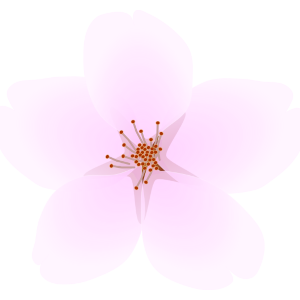
Let's briefly examine the ‘Solanaceae’ family. While included within the ‘Solanales’ order, a common characteristic among its members is possessing five petals. As the name suggests, the ‘Solanaceae’ family includes the ‘Solanum’ genus (containing eggplants), the ‘Capsicum’ genus (containing bell peppers), and the ‘Nicotiana’ genus (containing tobacco). All possess five petals. The entire flower appears to bloom as if forming a five-pointed star. While these Solanaceae plants differ in color and size, they all seem to exhibit this similar flower opening pattern. Now, let's look at the Convolvulaceae family, also within the Solanales order. The Convolvulaceae family includes morning glories, as well as bindweed. Their flowers do not open in a star-like pattern; unlike the sharp angles of the Solanaceae family, they open in a more circular shape. The difference is significant enough that they can appear to be entirely different plants at first glance. Personally, however, even in Convolvulaceae flowers, the overlapping of petals and the shadows created by their layering can be perceived as resembling the trajectory of a five-pointed star. Perhaps such retained similarities manifest as differences within each family of the same order. That said, some might be surprised to learn that the Solanaceae family includes the genus Nicotiana, which contains tobacco. It's truly a case of “they were actually relatives.” Consider eggplants and chili peppers, viewed as part of the “health” category of vegetables, and tobacco, treated in modern times as something “harmful.” Conceptually, they are polar opposites. Yet, there is a taxonomic fact: they are very closely related plants, almost like family. There is absolutely no inherent good or bad in either plant; it all comes down to human handling—both physical and non-physical. Perhaps it boils down to humans using them appropriately in terms of capacity and purpose.
The Story Continues from the Morning Glory Family
Now, morning glories, dayflowers, and nightflowers all belong to the same family, the Convolvulaceae within the order Solanales. You might say they're family members, or perhaps relatives. Dayflowers, true to their name, belong to the straight-growing genus Ipomoea. However, morning glories and nightflowers actually belong to the genus Ipomoea. You see, they share blood ties with that sweet potato, the one gaining attention lately as a healthy sweet treat in things like “roasted sweet potatoes” and “dried sweet potatoes.” Even so, morning glories remain very closely related plants. In fact, considering this, it's quite surprising and interesting that sweet potatoes and chili peppers—two things that seem worlds apart, the epitome of “sweet” and the epitome of “spicy”—are actually distant cousins, meaning they're related after all.
But setting that aside, after morning glories, dayflowers, and nightflowers, isn't there one more that catches your attention? That would be the evening glory. Morning, day, night, and “evening”—they're all there. However, the evening glory is a completely different plant. “Huh? Aren't they similar? Aren't they part of the same series?” You might be tempted to think that, but taxonomically, the evening glory is a distinct plant species. They may both be angiosperms, but that's where the similarity ends. While morning glories, dayflowers, and nightflowers belong to the order Dipsacales, family Convolvulaceae (under the superorder Asteridae), evening glories belong to the order Cucurbitales, family Cucurbitaceae, genus Ipomoea. Their taxonomic roots are fundamentally different. This means they look like relatives but are actually as different as chalk and cheese. The ultimate in being similar yet fundamentally different—it was as if the only similarity was their names. Seeing them in person, it's almost strange that their names are alike, given how much they are “strangers.” Yet, they are still plants.
The Fascinating World of Plants Through Human-Created 'Classifications'
『Plantae』→『Division』→『Class』→『Order』→『Family』→『Genus』→『Species』— I've touched on classification, specifically plant taxonomy. To put it bluntly, it's a division created by humans for humans, designed for convenience. Yet, when viewed through this lens, the image I'd arbitrarily held of a certain plant—whether it fit an ideal narrative or belonged to a completely unexpected lineage—sometimes unfolds exactly as I'd imagined, or sometimes not at all.
“Actually being relatives” or “complete strangers” are just one example of this. Despite the classification, the contributions plants make to people are so immense they can instantly overwhelm any categorization. That's why we unconsciously form all sorts of images about plants. This isn't a bad thing at all; rather, it's precisely what makes it interesting. I think the contrast between these somewhat wild images and the orderliness of classification is surely fascinating. It might also spark new interest in plants.
I hope this perspective helps broaden our image of plants even further.