Diagram of a single-stem cucumber vine
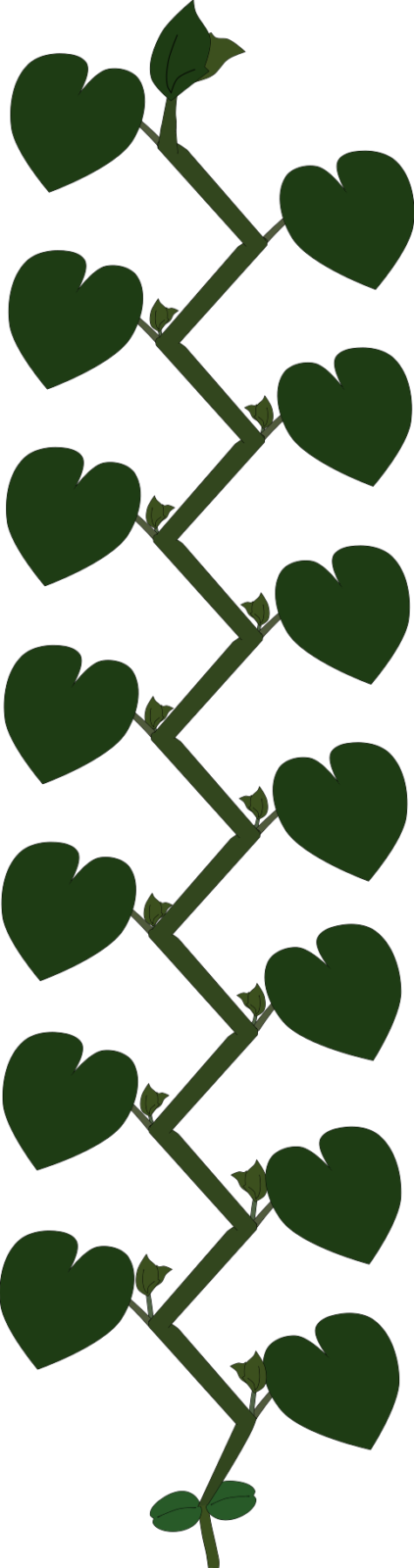
This is a diagram of a cucumber trained as a single stem with the parent vine as the main stem.
The main stem grows by bending sharply at each node. A single leaf grows at each node, and side shoots (daughter vines) emerge between the main stem and the leaf.
Diagram of cucumber fruit formation in the “node-type (main stem type)” pattern
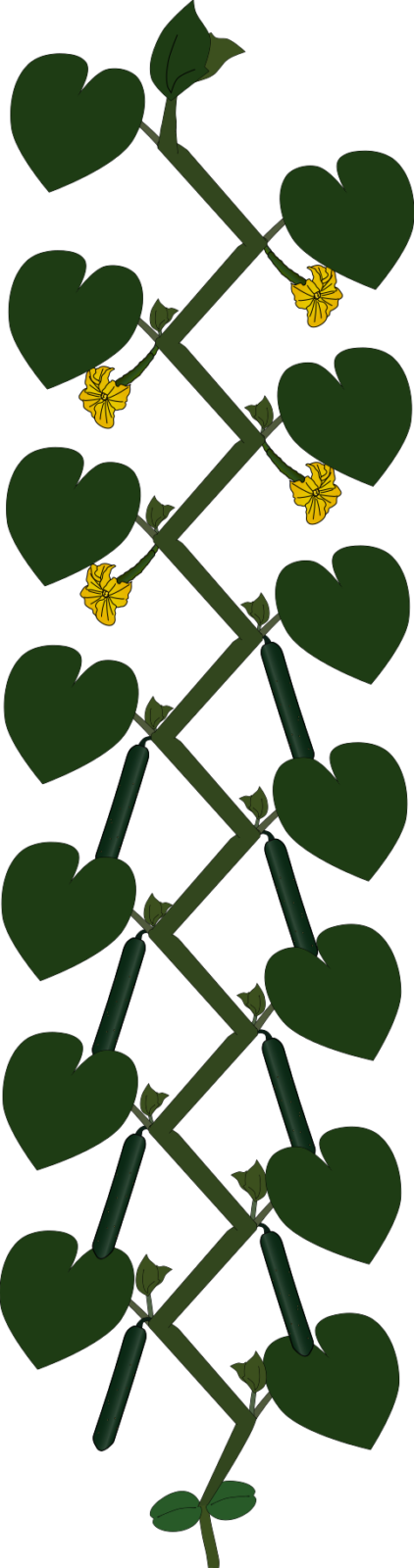
The fruiting pattern of cucumbers is known as the “node-bearing type” (main stem type). A tendency or pattern can be observed in how cucumber fruits form on the main stem. This diagram shows one such pattern, called the “node-bearing type.”
Cucumber fruits form at each node along the main vine. It shows that a lateral bud emerges between the leaf at the node and the main vine (main stem), and the cucumber fruit develops at that same point. The upper part depicts the state of the female flower where the fruit has not yet grown large. In other words, as shown in the illustration, a female flower attaches at each node along the main vine.
Diagram of cucumber fruit formation patterns: “Skipped-node type and lateral branch type”
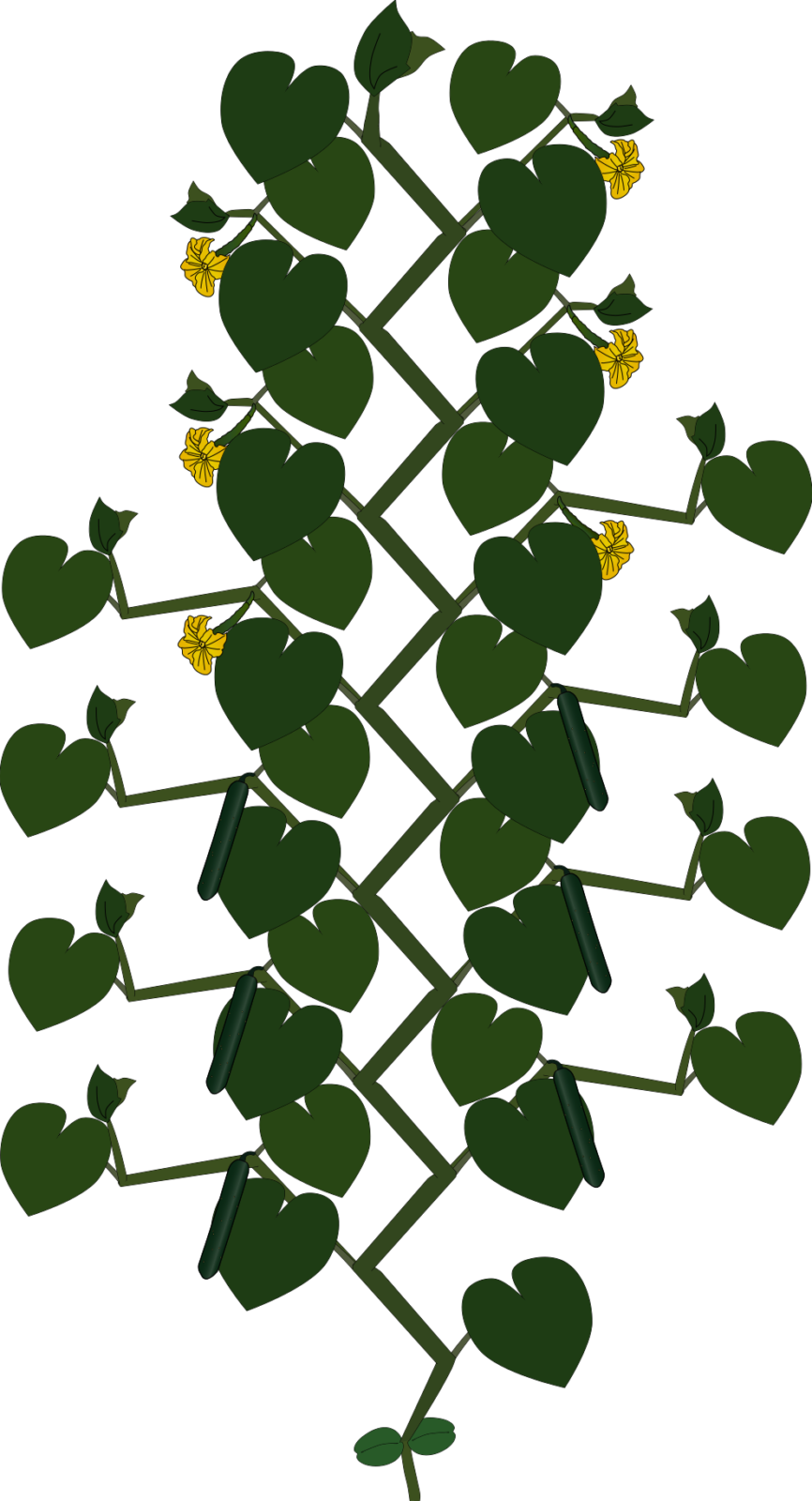
The fruiting pattern of cucumbers shows distinct tendencies and patterns. This diagram illustrates one such pattern called the “alternate node type,” specifically the side branch pattern.
Leaves grow from each node along the main stem extending from the central cotyledons. As shown in the diagram above, axillary buds develop between the stem and these leaves. These buds elongate and develop into side branches (daughter vines).
This growth pattern indicates that fruit does not form on every node of the main vine. Instead, female flowers primarily bloom on the nodes of the side branches, where the fruit develops.
How to Use the Diagram: Reference Examples
Below are examples illustrating how the materials in the above diagram might be used. Using schematic diagrams to visualize aspects that words alone cannot fully convey makes the information significantly easier to understand.
Reference Example #1
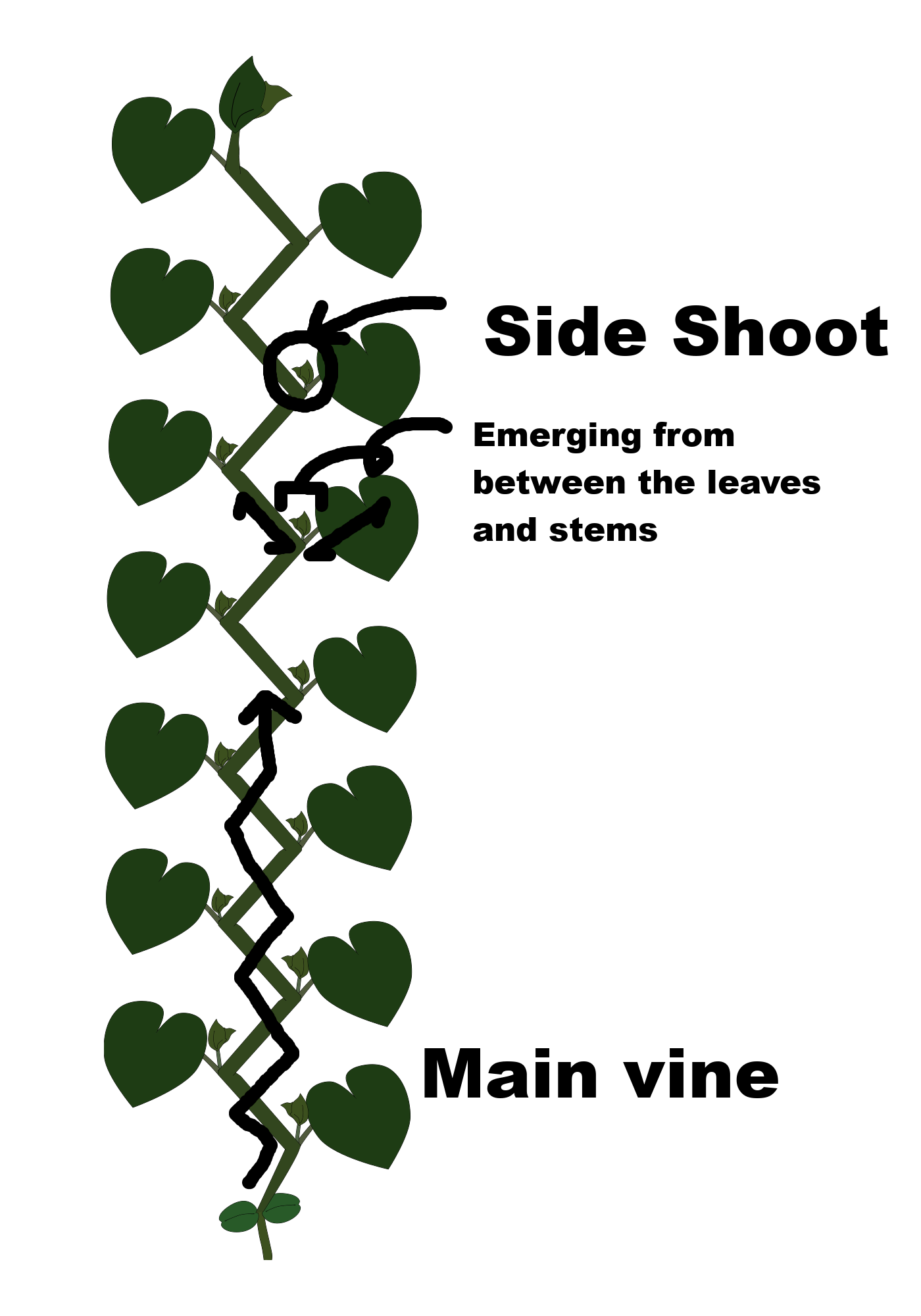
Reference example using the “Single-stemmed Cucumber Diagram”.
This diagram illustrates cucumber parts. Black circles or lines are added to indicate side shoots, with names written as arrows to label them.